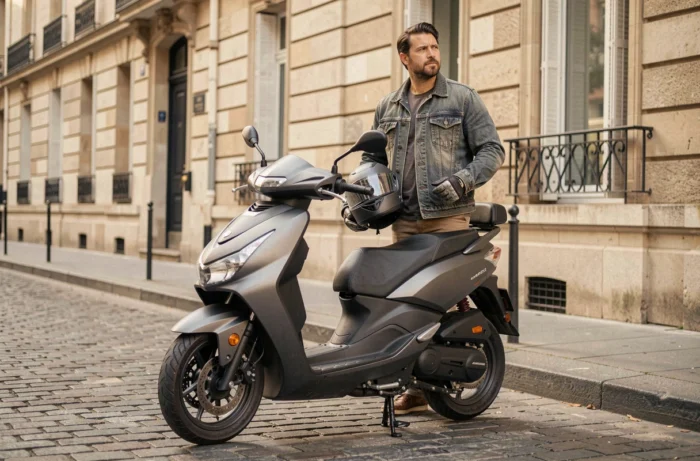
Choosing between a 300cc scooter and a 400cc scooter comes down to deciding between two machines that are similar on paper, but whose differences become significant based on specific criteria: torque available on inclines, behavior on fast roads, insurance costs, and upcoming regulatory constraints. This article measures these differences point by point, supported by market data for 2026.
300cc vs 400cc Scooter: Technical Differences Table
Both engine sizes share the same license (A2), the same maxi-scooter dimensions, and often the same platform from a given manufacturer. The differences lie in raw performance and overall budget.
| Criteria | 300cc Scooter | 400cc Scooter |
|---|---|---|
| Required License | A2 | A2 |
| Main Use | Urban and suburban | Suburban, fast roads, two-up |
| Engine Torque | Sufficient in the city, limited on loaded inclines | Significantly higher, more comfortable two-up and on slopes |
| Fuel Consumption | Moderate | Slightly higher |
| Insurance Cost | Lower | Higher (higher tax horsepower) |
| Weight | Lighter, increased urban maneuverability | Heavier, stability on major roads |
| Technical Inspection (vehicles registered since 2024) | Yes, at 5 years | Yes, at 5 years |
The table reveals a simple observation: with the same license and identical regulatory constraints, the difference comes down to torque, weight, and budget. A 300cc purchased new in 2024 will be subject to the same technical inspection obligations as a 400cc, which negates the argument of administrative simplicity sometimes put forward for smaller displacements.
To delve deeper into each criterion before signing, a comparison of 300cc and 400cc scooters details the points of caution model by model.
Torque and Acceleration on Fast Roads: Where the Extra 100cc Counts
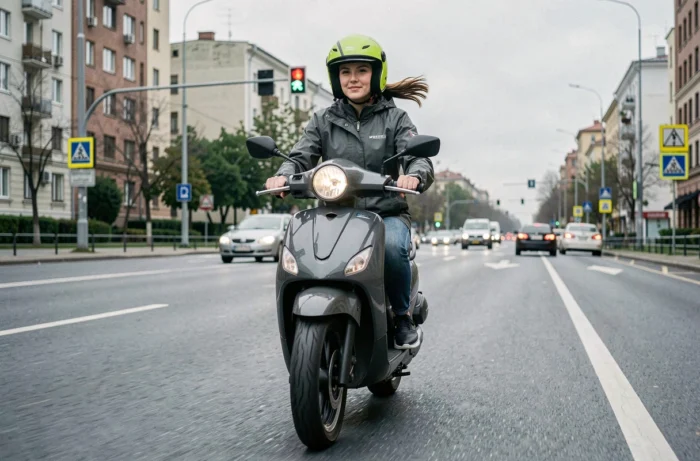
In pure urban traffic, a 300cc scooter meets the majority of situations. Acceleration at traffic lights, merging onto boulevards, and short commutes of a few kilometers only require a fraction of the available power.
The difference becomes tangible in two specific cases. The first: acceleration on fast roads, particularly sections at 110 km/h where a safe overtaking requires an instant torque reserve. The second: two-up riding in hilly areas, where the weight of the passenger and cargo puts strain on the engine during climbs.
User feedback on Yamaha X-Max (available in both 300 and 400) converges on this point: when riding solo on flat terrain, the difference in feel is minimal. However, when loaded or on an incline, the 400 maintains a reserve of acceleration that the 300 cannot offer. This is not a question of top speed, but of the ability to maintain pace without pushing the engine to full throttle.
Overall Budget for a 300 or 400 Maxi-Scooter: Beyond the Purchase Price
The list price represents only part of the equation. Three expense categories widen the gap between the two engine sizes over the duration of ownership:
- Insurance: the higher tax horsepower of the 400cc leads to a higher premium, sometimes significantly depending on the driver’s profile and geographical area.
- Fuel Consumption: a 400cc consumes more than a 300cc at equivalent speeds, a modest daily extra cost but which accumulates over several years.
- Technical Inspection: every scooter registered since 2024 must undergo a first inspection before its fifth anniversary, regardless of the segment. This cost, identical for both 300 and 400, now adds to the regular maintenance budget.
Mechanical maintenance (oil changes, brake pads, belt) remains comparable between the two engine sizes when they share the same engine base. The most variable cost is insurance, directly linked to power and the theft statistics of the chosen model.
ZFE Restrictions and Crit’Air Sticker: A Parameter Often Overlooked in Comparisons
Low emission zones (ZFE) already affect most major French urban areas. Recent 300cc and 400cc thermal scooters receive a Crit’Air sticker of 1 or 2 depending on their registration date and Euro standard.
Crit’Air 2 models are still allowed today in all active ZFEs. However, Paris is announcing restrictions on Crit’Air 2 by 2028-2030, and other metropolitan areas may follow. A buyer planning to keep their scooter for more than five years must factor this risk into their calculations.
This parameter weighs equally on both 300cc and 400cc thermal scooters. It does not differentiate the two engine sizes from each other, but it puts into perspective the value of a heavy investment in a new thermal maxi-scooter for exclusively urban use, especially in large city centers.
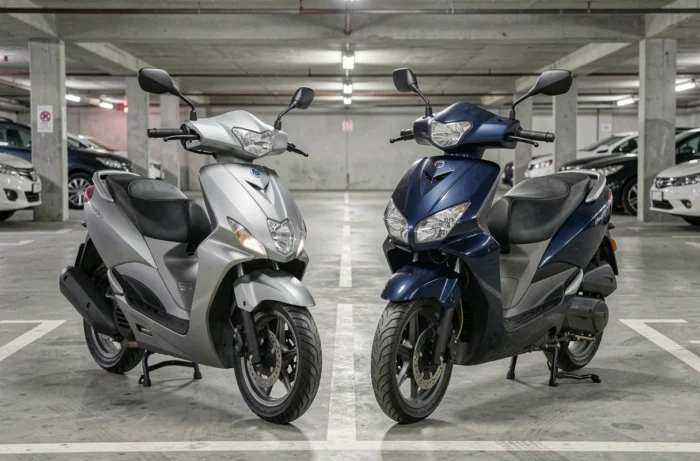
300cc or 400cc Scooter: Which Engine Size Based on Trip Profile
Three trip profiles allow for a clear decision:
- Short urban trip (less than 15 km, flat terrain, solo): the 300cc is sufficient. Its maneuverability and lower consumption make it the rational choice.
- Mixed city-periphery trip with sections on fast roads: the 400 provides comfort in acceleration and a safety margin for overtaking that justifies the extra cost.
- Regular use two-up or in hilly areas: the additional torque of the 400 is no longer a luxury, it’s a mechanical necessity to preserve the engine and riding comfort.
The maxi-scooter market is also experiencing downward pressure on registrations of powerful models in 2026, which may result in more accessible discounts on 400cc models at dealerships. The price gap at purchase between a 300 and a 400 should be verified at the time of negotiation, as it fluctuates based on stock.
The choice between these two engine sizes boils down to a question of torque under load. If your trips remain flat, short, and solo, the extra 100cc makes no difference in your daily life. As soon as a passenger, a hill, or a fast road enters the equation, the 400 becomes the most coherent choice from a mechanical and safety standpoint.