The classic car market is undergoing a profound transformation. Buyer profiles are changing, regulations are tightening, and the segments that are driving value are no longer the same as they were ten years ago. Measuring these changes helps to understand where value lies today for enthusiasts of vintage automobiles.
HAGI Indices and Polarization of the Classic Car Market
Data from the HAGI indices reveal a two-phase trajectory. Between 2020 and 2022, transaction volumes and prices significantly increased, driven by low rates and the search for alternative investments. Since 2022, the market has entered a consolidation phase with increased selectivity.
| Segment | Change from 2014-2024 | Recent Trend |
|---|---|---|
| HAGI Top (iconic and rare models) | Over 100% increase | Sustained demand, stable or rising prices |
| Mid-range segment (€30,000 – €100,000) | Much more moderate increase | Strong selectivity, some models declining |
| Youngtimers (1980s-90s) | Recent and rapid increase | Strong momentum driven by new buyers |
This table illustrates a polarization of the market in favor of rare models. Exceptional Ferrari, Porsche, or Aston Martin cars continue to attract capital, while the mid-range segment struggles to keep up. This phenomenon is partly explained by rising interest rates and competing interest in tech and AI-related assets.
To delve deeper into this universe, enthusiasts can find resources and news at https://gentlemen-drivers.fr/, which covers market trends and classic car culture.
Youngtimers and the Refreshing of Collectors: What the Numbers Show
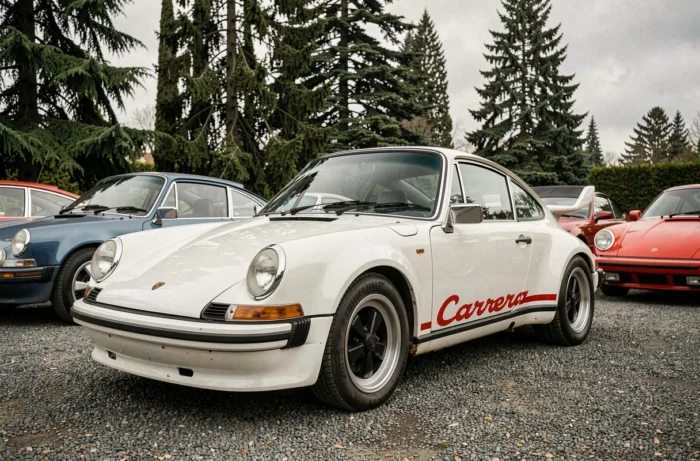
The observation is shared by all industry professionals since 2024: the clientele is getting younger. New collectors are not buying the same cars as their predecessors. They are turning to GTs, sports cars, and sedans from the 1980s to 1995, the ones they saw in their childhood.
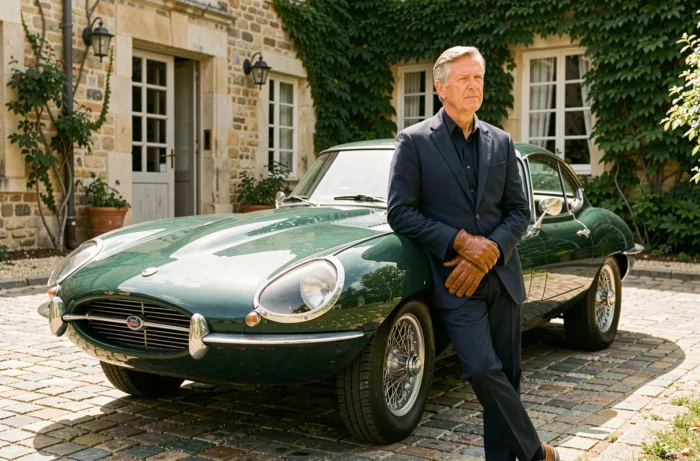
This phenomenon has a direct corollary: pre-war cars and those from the 1950s-1970s are experiencing a sharp slowdown in sales. The logic is generational. A 40-year-old buyer in 2026 grew up with the Peugeot 205 GTI, the Renault 5 GT Turbo, or the BMW E30, not with a Jaguar E-Type.
- Porsche 964 and 993 are among the most sought-after youngtimers, with values that have significantly increased in recent years
- Japanese sports cars (Mazda MX-5, Toyota Supra, Nissan Skyline) are attracting a new wave of collectors, often younger
- Characterful sedans (Mercedes W124, BMW E34) are gaining visibility at gatherings and specialized auctions
On the other hand, pre-war models struggle to find buyers outside of very high-end sales. The gap in dynamics between youngtimers and classic vintage cars is widening year after year.
Collection Registration and Regulatory Constraints in 2026
The regulatory framework adds a variable that every gentleman driver must consider in their thinking. The collection registration, issued for vehicles over 30 years old, offers tangible benefits: exemption from standard periodic technical inspections and the ability to circulate in certain ZFE (low emission zones).
A notable change will occur on October 1, 2026: FFVE fees for the collection certificate will increase. This certificate, issued by the French Federation of Vintage Vehicles, is a necessary step to obtain the collection registration. The increase raises the entry cost for new collectors.
The issue of ZFE remains a major point of friction. French metropolitan areas are gradually tightening their Crit’Air restrictions. Collection vehicles registered with a collection registration benefit from an exemption, but this is not uniform across cities. Some metropolitan areas apply stricter rules than others.

- The collection registration exempts from the classic technical inspection but imposes an FFVE certificate whose cost is increasing
- ZFE exemptions for collection vehicles vary from one metropolitan area to another, complicating daily circulation
- Crit’Air restrictions could still evolve by 2027, with tightening announced in several urban areas
The regular use of a classic car in the city becomes a parameter to check before any purchase. A beautiful model that can no longer drive in its own metropolitan area loses part of its practical interest.
Classic Cars as Investments: Data and Limits
The over 100% increase in the HAGI Top index over ten years naturally attracts the attention of investors. This figure deserves context. Only iconic and rare models have experienced this trajectory. The mid-range segment has progressed much more modestly.
Buying a classic car with a wealth preservation mindset requires taking into account recurring costs: suitable storage, specialized mechanical maintenance, dedicated insurance, and now rising administrative fees. The actual profitability depends as much on the choice of model as on the management of holding costs.
The consolidation phase observed since 2022 shows that the market does not rise linearly. Buyers have become more selective. A vehicle with an incomplete history or with approximate restoration is negotiated at a significant discount compared to a documented and original condition example.
The classic car market remains a field where passion and analysis complement each other. HAGI data, the youngtimer shift, and regulatory constraints shape a landscape where each purchasing decision benefits from being supported by verifiable facts rather than just emotion.