
GPS bracelets and watches for children are multiplying in the French market, driven by a growing parental demand. Behind the promise of real-time location, the devices differ in their technology, business model, and relationship to the child’s privacy. Choosing a GPS bracelet for a child involves untangling several parameters that product sheets do not always clarify.
GPS, Bluetooth, SIM card: what the bracelet technology hides
Not all trackers work the same way, and this distinction has a direct impact on daily use. A bracelet equipped with a GPS chip coupled with a SIM card (GSM/4G network) transmits the child’s position in real-time, even at unlimited distances. This is the case for devices like Le Guardian, which integrates a multi-operator SIM card that works within the European Union.
In contrast, a simple Bluetooth tracker (like an AirTag or equivalent) only covers a radius of a few dozen meters around the parent’s smartphone. It signals proximity, not the geographical position on a map. A Bluetooth tracker does not replace a real GPS bracelet for outdoor tracking.
For parents looking to compare models on the market, it is possible to learn more on Ouaps before making a decision. The difference in technology also translates into a difference in cost: a GPS bracelet with a SIM involves a monthly subscription for data transmission, while a Bluetooth tracker does not incur recurring fees.
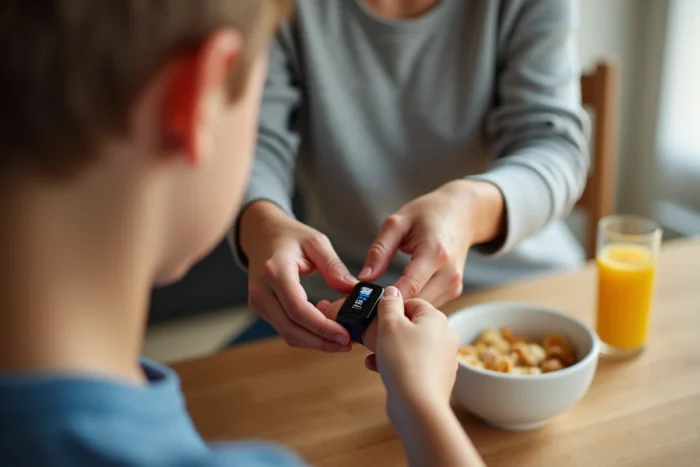
Total cost of a child GPS bracelet: subscription and hidden fees
The price displayed at purchase only reflects part of the actual expense. The total cost must include the mobile subscription linked to the SIM card, billed monthly or annually depending on the manufacturers. Some models include the first year, while others do not.
Before choosing, check these expense items:
- The price of the GPS bracelet or connected watch itself, which varies significantly from one manufacturer to another.
- The monthly data/SIM plan, sometimes proprietary (impossible to use any other SIM card than the manufacturer’s).
- Any potential replacement fees for the bracelet, accessories, or hardware updates after one or two years of use.
A bracelet sold at a low price but associated with a high subscription can end up costing more over two years than a model with a higher purchase price. Calculating the cost over the expected duration of use avoids unpleasant surprises.
Child’s privacy and CNIL recommendations
The issue of privacy remains little addressed in product comparisons, even though it conditions the acceptability of the device by the child themselves. The CNIL makes several recommendations that deserve to be known before purchase.
Geolocation on demand rather than permanent
The CNIL advises to disable location when it is not needed. This criterion should guide the choice towards bracelets offering a one-time tracking mode, and not just continuous tracking. A child who is permanently located has a different experience than one whose parent activates the function occasionally, for example, on the school-home route.
Consent and maturity of the child
The CNIL recommends clearly informing the child about how the bracelet works and obtaining their agreement when they are mature enough to give it. The child’s agreement depends on their maturity, not just parental authority. This nuance changes how the device is presented within the family: imposing a GPS bracelet on a pre-teen without explanation risks generating rejection.
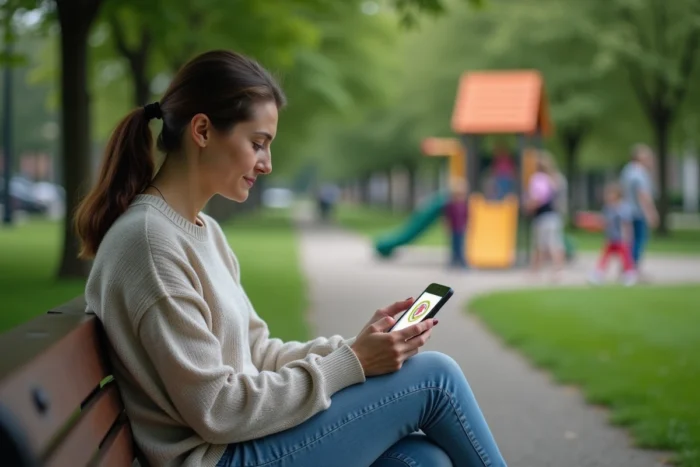
Cybersecurity and updates: an underestimated choice criterion
A GPS bracelet collects and transmits sensitive location data. The security of the associated application and the manufacturer’s update policy become criteria in their own right.
The CNIL recommends checking that the device (including second-hand) still receives regular security updates. A bracelet whose manufacturer has ceased software support potentially exposes the child’s data. Before purchasing a second-hand or clearance model, confirm that the mobile application is still maintained and that the manufacturer’s server remains active.
The parental application itself must protect access to data: strong authentication, encryption of communications, limitation on the number of users allowed to view the position. Field feedback varies on this point according to brands, and few comparisons actually verify the level of protection offered.
Useful features of the GPS bracelet: SOS button, calls, and zones
Beyond location, several functions differentiate GPS bracelets for children:
- The SOS button allows the child to send an alert by pressing a single button, triggering a call or SMS to the parents.
- The voice call function, present on GPS connected watches, allows the child to contact one or more predefined numbers without needing a smartphone.
- Zone detection (geofencing) sends a notification to the parent when the child enters or exits a defined perimeter, for example around the school or home.
- The battery life varies significantly depending on the models, from less than a day to several days, depending on the frequency of GPS transmission.
The choice depends on the child’s age and context. For a child in kindergarten, a simple bracelet with an SOS button and geofencing may suffice. A pre-teen moving alone in the city will benefit more from a connected watch with voice calls.
The market for child GPS bracelets is evolving rapidly, with increasingly autonomous models integrating multi-operator SIM cards and dedicated applications. The most often overlooked criterion remains the consideration of the child’s privacy and the manufacturer’s transparency regarding data security. A well-chosen GPS bracelet combines reliable technology, controlled costs over time, and respect for the framework set by the CNIL.