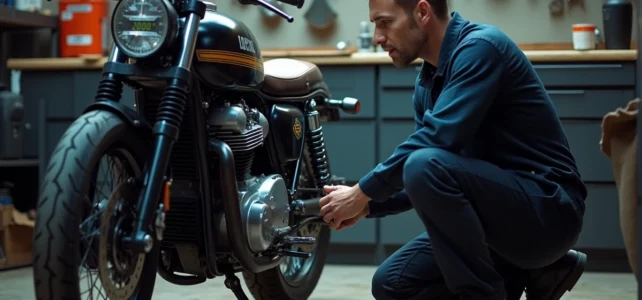
A motorcycle displaying 20,000 km on the odometer catches the eye in classifieds. The number seems reassuring, almost too low to pose a problem. In practice, this mileage doesn’t say much on its own: a machine that has been regularly maintained and ridden is often worth more than a motorcycle that has been sitting in the garage with fewer kilometers.
Low Mileage Used Motorcycle: The Trap of Prolonged Inactivity
We often come across ads like “20,000 km, very little used, always in the garage.” The seller thinks they are reassuring. In reality, a motorcycle that sits for a long time deteriorates in other ways.
The fork seals dry out and leak. The brake hoses lose flexibility. Gasoline stagnates in the fuel system and leaves deposits in the injectors or carburetor bowls. The battery, after several months without charging, permanently loses capacity.
A motorcycle with 20,000 km over ten years has been ridden an average of 2,000 km per year, which corresponds to a few occasional outings. The tires may look fine visually, but the rubber hardens over time and loses grip long before reaching the wear indicator. You may find yourself replacing tires that appear almost new simply because they have aged.
Conversely, a motorcycle with 20,000 km over three years has been used regularly. Fluids have circulated, moving parts have worked, and the owner has likely followed maintenance intervals. When asking is 20,000 km a lot for a motorcycle, the real variable is the ratio between mileage and the age of the machine.

Motorcycle Technical Inspection and Used Purchase: What Changes Practically
The technical inspection for motorized two-wheelers is gradually being implemented in France. The transitional schedule for 2024-2026 introduces motorcycles based on their date of first registration. For resale, a technical inspection less than six months old may now be required.
This changes the game for used purchases. Previously, one relied on mileage, visual condition, and the seller’s word. The technical inspection now provides an external diagnosis on braking, lighting, pollution, and the general condition of the chassis.
In practice, it is recommended to check three things before going to see a motorcycle:
- The technical inspection report, if it already exists, with a list of minor or major failures noted
- The maintenance book or service invoices, even partial, that prove regular follow-up with a professional
- The consistency between the date of first registration, the displayed mileage, and the visible wear of controls (levers, footrests, seat)
A seller who refuses to present these documents for a motorcycle with 20,000 km should trigger a reflex of distrust, regardless of the displayed price.
Used Motorcycle Maintenance: Items to Check Before 30,000 km
Mileage alone does not predict upcoming expenses. What matters is knowing what maintenance has been done and what remains to be done.
On most models, the manufacturer recommends an intermediate service around 10,000 to 12,000 km and a more comprehensive service around 20,000 to 24,000 km. This second service often includes replacing the coolant, checking the valve clearance, and sometimes changing the timing chain on certain engines.
Items That Sellers Often Forget
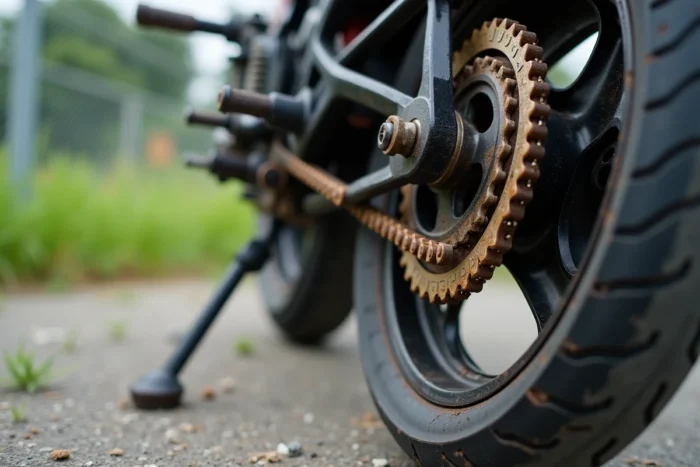
The chain and complete kit (sprocket, crown) wear out gradually. On an urban motorcycle that undergoes frequent accelerations and braking, this kit may need to be replaced before 25,000 km. The cost of the part and installation is not negligible.
Brake fluid absorbs moisture over time. Even if the motorcycle has only 20,000 km, brake fluid that has never been flushed in three years compromises safety. This is a simple item to check: the color of the fluid in the master cylinder reservoir says a lot.
Wheel and steering bearings do not show obvious signs unless you pay attention. They are tested by lifting the front wheel and looking for lateral play or a stiff point in the steering column’s rotation.
Mileage of Motorcycles by Type of Engine: Gasoline vs. Electric
Ad results now mix gasoline and electric motorcycles. Comparing mileage between the two makes no direct sense.
On a gasoline engine, 20,000 km involves oil changes, filters, a clutch that has been used, and a transmission chain to monitor. On an electric motor, most of these items do not exist. The mechanical wear of an electric motorcycle at 20,000 km focuses on brakes, tires, and the battery.
Feedback varies on this point, but battery degradation depends more on the number of charge cycles and storage conditions than on raw mileage. An electric motorcycle parked for six months with a fully charged battery can lose more capacity than another that is ridden daily.
For a gasoline used motorcycle, mileage remains an indicator among others. For an electric one, we will look more at the remaining capacity percentage of the battery (often checkable via a manufacturer diagnostic) and the charging history.
Negotiating the Price of a Used Motorcycle with 20,000 km
Mileage perceived as “low” leads some sellers to inflate their prices. We see motorcycles five or six years old listed at the market price of a two-year-old model, simply because the odometer remains low.
The strongest negotiation argument remains the list of upcoming work. If the major manufacturer service has not been done, if the tires are nearing their age limit, if the technical inspection reveals minor failures, each item can be quantified and deducted from the asking price.
- Major service not performed: direct argument to lower the price by the estimated cost of the intervention
- Tires over four years old, even if minimally worn: replacement needed for safety reasons
- Absence of maintenance invoices: no proof of follow-up, thus increased risk for the buyer
A low odometer reading without maintenance proof does not justify a high price. The value of a used motorcycle is reflected in its invoices, its technical inspection, and the condition of its consumables, not in an isolated number on the dashboard.