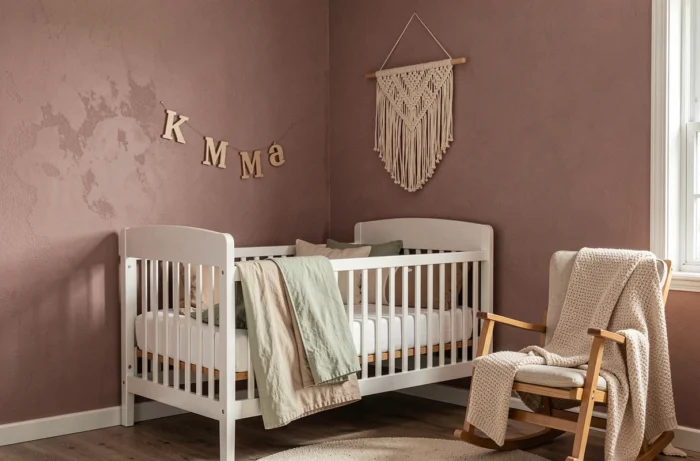
Choosing the wall color, the bed style, the furniture layout: customizing the baby’s room requires a creative energy that few parents suspect until they get started. Decor trends evolve quickly, and uniform pastel palettes give way to more expressive, tactile, and sometimes bolder approaches.
Warm minimalism: the palette replacing all-pastel in the baby’s room
Have you noticed that the baby rooms showcased on social media all seem beige? This total neutral look is fading. The dominant trend for nurseries is called warm minimalism, a style that retains Scandinavian sobriety but injects deeper colors.
Specifically, we replace the all-off-white with more contrasting combinations: a soft ochre or cocoa brown wall, paired with ecru linen on the bedding. Terracotta, deep sage green, and tobacco complete the palette. The idea is to create a warm space without saturating the room.
Specialty stores like sidonieetgedeon.fr offer accessories and linens that align with this approach, featuring natural materials and refined hues. The result is a room that doesn’t look like a catalog photo, but like a real lived-in cocoon.
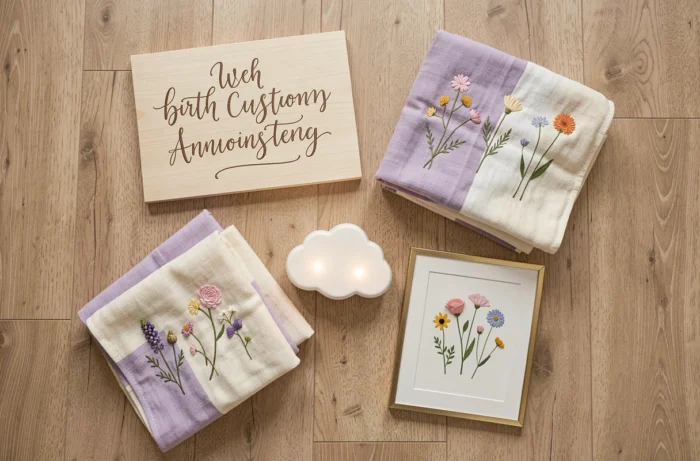
To test this direction without repainting the entire room, start with textiles. A tobacco-colored cotton gauze throw on the crib rail, terracotta linen floor cushions, a woven rug in warm tones: textiles set the mood before even touching the walls.
Gender-neutral colors for room decoration: a structural choice
Gender-neutral palettes are no longer a marginal option reserved for activist parents. They have now become the norm in the majority of documented children’s room design projects in recent times.
Sage green, sandy beige, off-white, and soft terracotta replace the pink and blue codes. Why this choice? Because a neutral palette remains coherent as the child grows. There’s no need to redo everything at three years old.
These shades work well in both a bohemian universe and in a japandi or neo-rustic decor. The bohemian style, for example, combines natural fibers (rattan, jute, macramé) with these soft colors for an organic look. Japandi, on the other hand, focuses on clean lines and light wood.
- Sage green and ecru linen for a calming base that suits both sexes and all themes.
- Terracotta paired with blonde wood for a warm neo-rustic spirit that is easy to evolve.
- Cocoa brown as an accent (one wall or a painted piece of furniture) to anchor the space without darkening it.
Personalizing walls without wallpaper: relief, textile, and DIY
Relief wall decorations are gaining ground. Felt flowers, fabric animals, geometric shapes in wood: these elements add texture and volume. The baby’s room becomes a sensory space, not just visual.
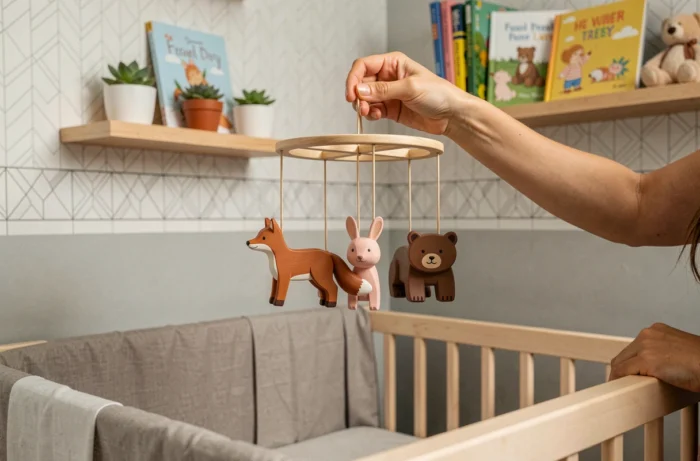
Relief stimulates the infant’s gaze more than a flat surface. A handmade felt mobile above the crib, a cotton cloud garland along a shelf: these pieces attract attention without overwhelming.
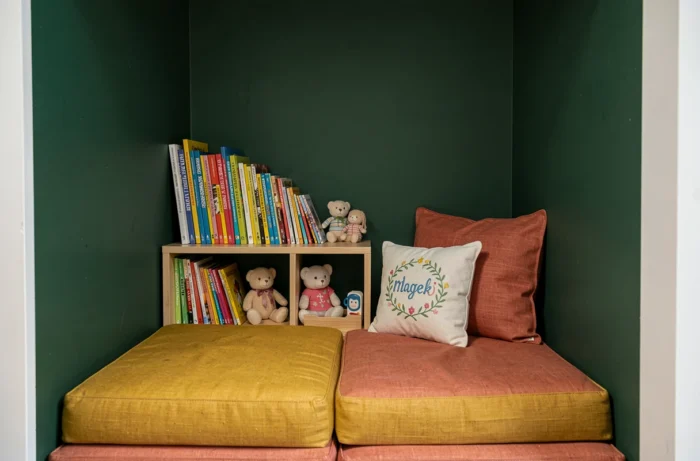
DIY remains a solid option for personalizing on a budget. A raw wood frame with the child’s name cut out with a laser, a macramé hanging made with a few meters of cord: these projects require little material and yield a unique result.
An effective approach: choose a single accent wall and concentrate all the decoration there. The rest of the room remains understated. This asymmetry creates a focal point without turning the room into a showroom.
Transformable furniture and cabin beds: investing for the long term
The cabin bed has become a classic in children’s rooms, but its appeal goes beyond aesthetics. Its low structure allows the now-grown baby to get in and out on their own, promoting independence according to Montessori principles.
Before buying, check one technical point: the mattress height must be adjustable to transition from infant mode to child mode. A cabin bed without this option requires purchasing a new frame after two years.
The same reasoning applies to other furniture. A changing table with a removable top becomes a classic storage piece. A wall-mounted foldable changing table frees up floor space once the child is potty trained.
- Adjustable height bed: usable from birth to about four or five years.
- Changing table with removable top: transforms into storage for children’s clothes.
- Modular wall shelves: repositionable as the child grows and their belongings change.
- Low nursing chair: later becomes a reading seat for the child.
The choice of untreated solid wood furniture also addresses health concerns. Particle boards emit volatile organic compounds, a topic of caution in a room where an infant spends most of their time.
Customizing the baby’s room is not about accumulating decorative objects. It lies in the coherence between colors, materials, and furniture choices. A space designed with warm hues, a few handmade pieces, and furniture that can grow with the child will last much longer than a fixed themed room that will need to be redone in two years.