Talking about retirement after 60 often involves listing hobbies or generic health advice. Recent data tells a different story: in 2025, 44.4% of 60-64 year-olds are still employed, a record since 1975 according to Dares. This proportion, commented on by Klesia and Partners Finances, reshapes what it means to live a dynamic retirement. The model of a sharp break between professional activity and rest no longer corresponds to the majority of life paths.
Employment Rate of Seniors and Gradual Retirement: Game-Changing Data
The increase in employment among 55-64 year-olds has never been so pronounced. Several factors converge: successive pension reforms, gradual retirement schemes, and personal choices to maintain part-time paid work.
| Indicator | Recent Trend |
|---|---|
| Share of 60-64 year-olds in employment (2025) | 44.4%, notably up over three years |
| Employment rate of 55-64 year-olds | Highest level since 1975 |
| Preferred forms of activity | Part-time, combined work-retirement, gradual retirement |
These figures show that a dynamic retirement massively includes chosen paid activity. The combined work-retirement model, for example, allows individuals to continue working without income limits since the latest reforms, while still receiving their pension.
For those looking to structure this transition between professional life and full retirement, dedicated platforms for seniors offer tailored resources: https://www.cercle-des-seniors.fr/ gathers various activity ideas and networking opportunities.
“Aging Well” Law 2024: A Legal Framework for Active Aging
Competing articles rarely address the regulatory aspect. The law introducing measures to build the “society of aging well in France,” enacted on April 8, 2024, introduces concrete provisions that modify the daily environment for retirees.
Three Key Structural Measures to Remember
- The creation of a departmental public service for autonomy, which centralizes access to assistance and support for elderly people living at home.
- A regulated right to visit in nursing homes, ensuring the maintenance of social connections for residents, even during health crises.
- Implementation decrees expected in 2026 that specify the funding and organization of these new services.
This legislative framework reflects a change in approach. Public policy is no longer limited to addressing dependency: it organizes the conditions for active aging at home. For a 60-year-old retiree, this means simplified access to concrete assistance (housing adaptation, personal services) without waiting for a loss of autonomy.
Physical and Cognitive Activities After 60: What Research Really Highlights
All guides recommend “moving” and “stimulating memory.” The pertinent question concerns the type of activity and the regularity that produce a measurable effect on health.
Physical Activity: Regularity Over Intensity
Recommendations converge towards regular, even moderate, practice. Daily walking, swimming, or cycling maintain joint mobility and cardiovascular capacity. Senior clubs and municipal workshops offer suitable time slots, often supervised by sports educators trained for older audiences.
Three weekly sessions of moderate activity are sufficient to preserve mobility and reduce the risk of falls. In contrast, intense practice without supervision can exacerbate pre-existing joint pathologies.
Memory Games and Cognitive Workshops: Beyond Sudoku
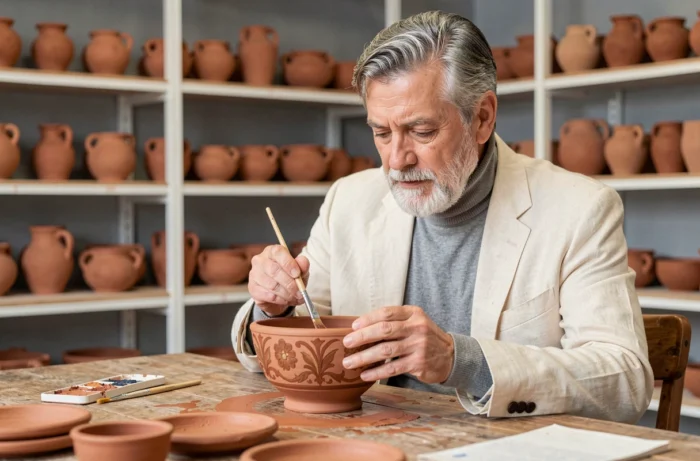
Cognitive stimulation is not limited to logic games. Learning a language, reading regularly, participating in writing or theater workshops engage complementary brain functions: working memory, cognitive flexibility, sustained attention capacity.
Collective workshops add a social dimension that enhances their effect. A group language course mobilizes memory, concentration, and interaction, whereas a solitary exercise only works on one of these dimensions.
Social Connections and Associative Engagement: The Underestimated Factor of a Fulfilling Retirement
Social isolation poses a documented risk to the physical and mental health of retirees. Data from MAIF on volunteering in 2026 confirms that associative engagement remains the primary vector of social connection after 60.
Forms of engagement vary: regular volunteering in an association, participation in leisure clubs, mentoring young professionals. Each meets a different need. Volunteering offers a sense of social usefulness. Leisure clubs maintain friendly relationships. Mentoring values accumulated professional experience.
The choice depends on each retiree’s profile. A person accustomed to a structured work environment will find their bearings more easily in an organized associative framework. Someone seeking primarily conviviality will lean towards informal group activities.
The key data in this overview remains the employment rate of 60-64 year-olds at 44.4%. This figure redefines the boundary between active life and retirement, and shapes how each individual constructs their daily life after 60: no longer as a break, but as a gradual transition where paid activity, leisure, health, and social engagement combine according to personal balances.