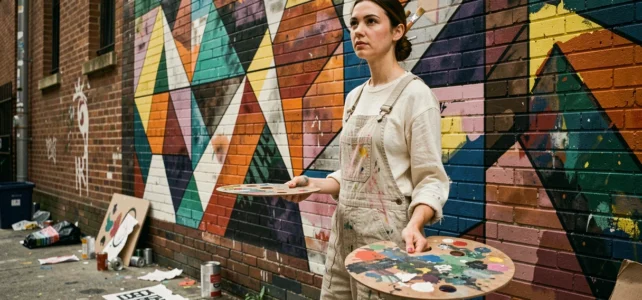
Alternative culture refers to a set of artistic practices that develop on the fringes of dominant distribution circuits: independent labels, self-managed galleries, self-produced festivals, fanzines, street collectives. These forms do not share a unique style, but a mode of production and circulation that escapes, at least partially, the commercial logic of major platforms and traditional cultural institutions.
Recommendation Algorithms and Visibility of Alternative Artists
The central question for alternative scenes is no longer about creation, but about discovery. The recommendation algorithms of major platforms (Spotify, YouTube, TikTok, Instagram) steer cultural consumption towards content with high retention. Works that generate less immediate engagement, often those from experimental or local scenes, mechanically lose visibility.
A recent report on the diversity of cultural expressions recommends a strengthened editorialization of recommendations, public support for translation, and increased European cooperation. This tension between algorithmic prescription and cultural variety presents an issue that older analyses, focused on copyright and digital commons, did not address from this angle.
Specialized media document these changes: NewTopia Magazine specifically covers these territories where contemporary art, experimental music, and dissident cultural practices intersect, offering an editorial alternative to algorithmic flows.
Digital Services Act: What the DSA Changes for Online Culture
The European regulation Digital Services Act (DSA), fully in effect since February 17, 2024, imposes unprecedented obligations on very large online platforms. Three mechanisms directly affect the alternative cultural ecosystem.
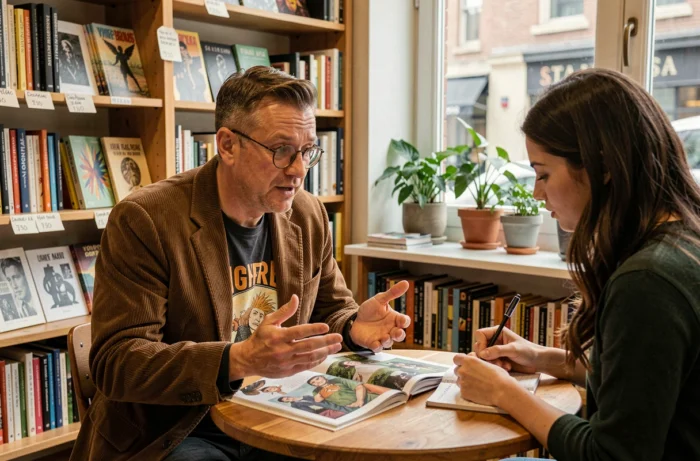
- Algorithm Transparency: platforms must explain how their recommendation systems rank and highlight content, allowing creators and researchers to understand why certain works remain invisible.
- Assessment of systemic risks: platforms are required to analyze whether their recommendations harm cultural diversity or amplify homogeneous content to the detriment of artistic niches.
- Access to data for researchers: academic teams can now study cultural diffusion biases based on real data, rather than estimates.
Sanctions can reach 6% of global revenue in case of non-compliance. The European Commission’s initial procedures target addictive designs and minor accounts on Instagram, Facebook, and TikTok. These algorithm adjustments could have indirect effects on the dissemination of alternative cultural content, reducing the emphasis on short and viral formats.
Territorial Funding for Alternative Culture in France
Financial support for alternative scenes does not solely depend on the central government. Local authorities and intermunicipalities constitute the primary funding lever for contemporary music venues, artist residencies, and intermediate cultural spaces.
The available data for the period 2019-2024 shows a slow erosion of cultural spending by local authorities. This trend primarily weakens the smallest structures, those that host emerging artists or hybrid forms (performance, digital art, noise music, independent publishing).
For alternative collectives, the consequence is twofold. The decrease in subsidies forces diversification of resources (crowdfunding, sponsorship, solidarity ticketing). It also pushes some venues to smooth their programming to attract a broader audience, which sometimes dilutes their artistic identity.
Ecological Transition and Cultural Venues
A guidance document published in January 2024 addresses the ecological transition of culture. Alternative venues, often located in wastelands or repurposed buildings, are directly concerned with issues of energy efficiency and material sobriety. Several independent festivals now incorporate environmental criteria into their specifications, from scenography to artist transportation.
Art and Artificial Intelligence: Intellectual Property and Alternative Creation
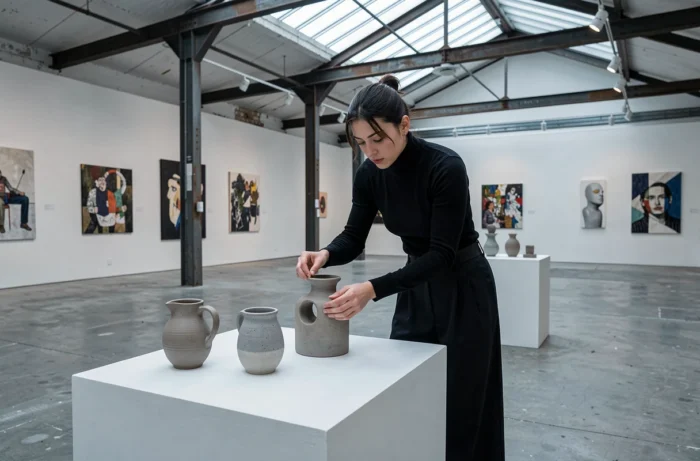
Generative artificial intelligence (text, image, music) disrupts the very notion of authorship. For alternative artists, the question arises acutely: their works, often distributed under open licenses or free access, feed the training bases of models without remuneration or consent.
The legal debate opposes two logics. On one side, proponents of extending copyright to AI-generated outputs. On the other, those who defend digital commons and believe that the free flow of ideas takes precedence over exclusive control. Lawrence Lessig had already framed this in the early 2000s in his analysis of the architecture of the Internet, warning about the consequences of excessive privatization for innovation and creativity.
For artists in the alternative scene, the concrete risk is the uncredited reproduction of their visual or sound style by tools accessible to all. The response lies less in law than in building communities capable of recognizing and valuing the original.
European Cooperation and Diversity of Cultural Expressions
The preservation of cultural diversity transcends national boundaries. Recent recommendations emphasize strengthened European cooperation, particularly to support translation and the circulation of works between countries. Alternative scenes would benefit from cross-border co-production mechanisms, still rare outside institutional networks.
The regulatory framework of the DSA, combined with national cultural policies, outlines a landscape where the visibility of alternative artists depends as much on platform regulation as on direct support. Alternative creation exists and renews itself, but its discovery by the public remains conditioned by technical and political choices that largely escape it.