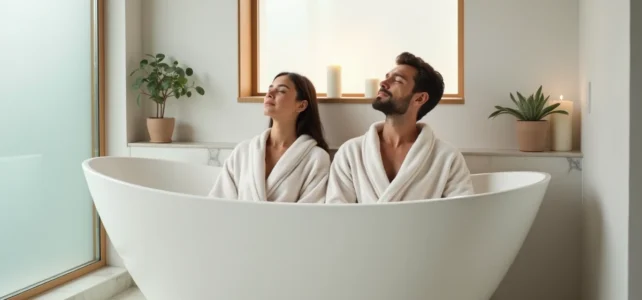
Between a classic balneo bathtub and an outdoor spa, the two-person indoor format occupies a unique position. Water consumption data, floor space, and the type of jets vary enough from one format to another that the choice deserves a comparative analysis rather than a simple crush.
2-person balneo bathtub or 2-person spa: compared consumption and space
The confusion between inflatable or rigid spas and built-in balneo bathtubs often arises. Both devices accommodate two adults, but their technical constraints differ in several measurable aspects.
| Criterion | 2-person balneo bathtub | 2-person spa (rigid or inflatable) |
|---|---|---|
| Water volume per filling | Approximately 300 to 450 liters (varies by model) | 600 to 800 liters on average |
| Location | Bathroom, built-in or freestanding | Outdoor, terrace or dedicated space |
| Drainage | After each use | Every 1 to 3 months (continuously filtered water) |
| Jet system | Hydro jets, air jets, or mixed | Mainly hydro jets |
| Electrical installation | Standard connection (integrated motor) | Dedicated connection, sometimes three-phase |
A spa advertised as “2 to 4 places” practically allows only two adults to sit comfortably. This discrepancy between theoretical and actual seating affects the choice, especially when the goal is regular use as a couple without compromising comfort.
Choosing a 2-person balneo bathtub integrated into the bathroom avoids the constraint of outdoor space and significantly reduces water consumption per session.
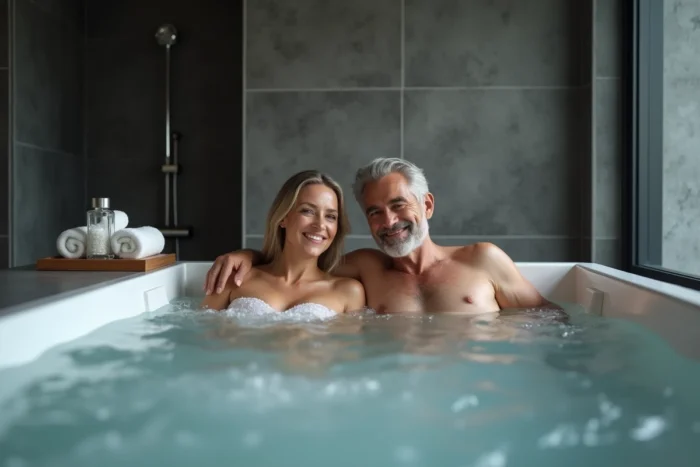
Head-to-head or side-by-side configuration: the ergonomics that change the experience
Competitors rarely talk about the physical arrangement of the two occupants in the tub. Yet this parameter determines whether the bath for two will be enjoyable or frustrating.
Head-to-head arrangement
Each bather has a sloped backrest at one end. The legs cross in the center of the tub. This configuration is the most common in rectangular models (common dimensions around 180 x 120 cm). It offers each person complete back support and direct access to the controls located on the edge.
The head-to-head arrangement guarantees two independent massage positions, with jets symmetrically distributed on each side. However, visual contact is less direct, which is more suitable for muscle relaxation than for a conversation.
Side-by-side arrangement
Reserved for corner models or wider tubs, this configuration places both occupants in the same direction. One of the two often benefits from a better position relative to the back jets. The sharing of space is less equitable, but the physical proximity feels more natural.
The choice between these two configurations depends on the primary use: targeted massage for each, or a shared moment where relaxation takes precedence over the symmetry of the jets.
Jet system for two: air, water or mixed
The type of jets directly affects the quality of the massage perceived by each occupant. In a two-person model, the distribution of power between the two bathing positions becomes a technical criterion to check before purchase.
- Hydro jets (pressurized water jets) provide a tonic and localized massage. In a two-person model, the motor must supply the jets on both sides without significant pressure loss. An undersized motor divides the power in half as soon as the jets from both positions operate simultaneously.
- Air jets (pulsed air jets) create a gentler bubbling effect, similar to a jacuzzi. The distribution is more homogeneous as air circulates freely throughout the tub. This system is also quieter.
- Mixed water and air systems combine both technologies. Some models allow switching from one mode to the other or activating them simultaneously, providing appreciated versatility for two users with different preferences.
The power of the motor, expressed in watts, varies by manufacturer. Ensuring that the model has a motor sized to supply all the jets operating simultaneously remains the most reliable technical point to avoid disappointment.
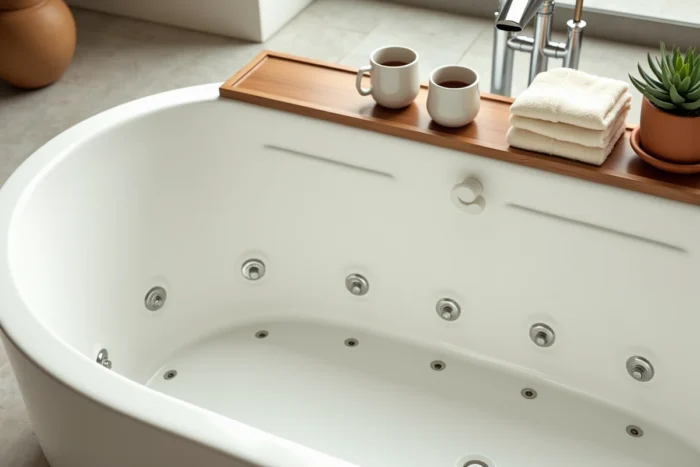
Maintenance of a 2-person balneo bathtub: how volume changes things
A two-person model contains more water and has more internal plumbing than a single model. The longer plumbing circuit increases the risk of bacterial deposits if maintenance is neglected.
After each bath, running the jet system for a few minutes with clear water helps rinse the pipes. A monthly cleaning with a disinfectant product suitable for balneo circuits (no pure bleach, which attacks the seals) extends the system’s lifespan.
The adjustable jets, which are more numerous on a two-person model, should be disassembled and cleaned regularly. Some manufacturers offer quick-release jets, a selection criterion often underestimated at the time of purchase.
Regular maintenance of the circuits prevents bad odors and preserves the power of the jets over time. The additional time required compared to a single-person model remains moderate, on the order of a few extra minutes per cleaning session.
Professional use: Airbnb, love rooms, and urban spas
The two-person balneo bathtub is no longer reserved for private bathrooms. Some distributors now position these models as equipment for Airbnb, love rooms, or wellness institutes. The argument holds: an accommodation equipped with a two-person balneo immediately stands out in the search results of booking platforms.
For rental use, the robustness of the tub (reinforced acrylic), the simplicity of the control panel, and ease of maintenance between tenants become priority criteria. A consumer model designed for weekly family use may not necessarily withstand a daily rotation of tenants.
The two-person indoor format presents a logistical advantage over the outdoor spa: no insulating cover to manage, no permanent chemical treatment of the water, and integration into an existing bathroom without excavation work. For an investor, the ratio between installation cost and perceived value by the end customer clearly favors the built-in balneo.