
Structuring a trip around targeted activities changes the very nature of the stay. Instead of piling up generic visits, we recommend building each day around an experience that justifies the trip on its own, whether in France or at an international destination.
Experiential activities and immersive workshops: the underutilized lever of a successful stay
Booking platforms (GetYourGuide, Viator, Manawa) have significantly expanded their catalogs in recent years. The fastest-growing segment is not the classic guided tour, but experiential activities involving the traveler: local cooking classes, pottery workshops, vineyard pruning introductions, guided photo sessions in a historic neighborhood.
This type of activity transforms the traveler into a participant. We observe that stays centered around at least one immersive workshop generate a more lasting memory than a mere accumulation of hastily photographed monuments.
To effectively filter through the hundreds of available proposals, find practical information on Voyages 365 that allows you to compare activity formats by destination and theme.
A common pitfall: booking a “touristy” workshop formatted for groups of twenty people. Prefer formats limited to eight participants, supervised by a craftsman or an independent local guide. The quality of the exchange is directly correlated to the size of the group.
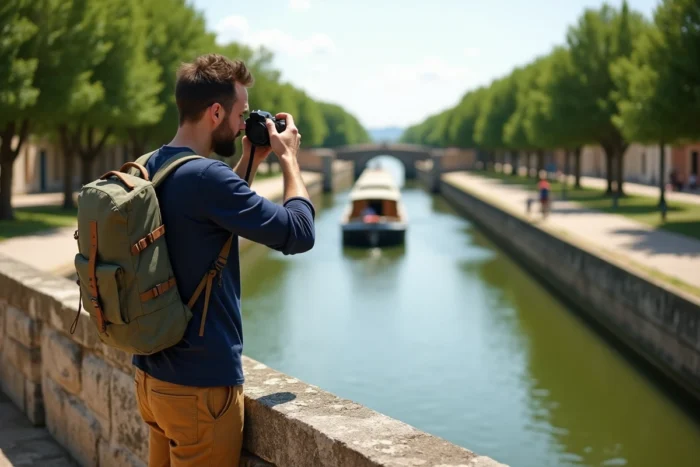
Train and bike trips in France: routes that hold up
The night train network relaunched in recent years (Paris-Nice, Paris-Briançon, Paris-Toulouse) has opened up concrete possibilities for stays without domestic flights. Lonely Planet France now dedicates entire sections to “flight-free” travel, a sign that the trend is surpassing the activist circle.
The practical interest goes beyond the ecological argument. A night train allows you to arrive early in the morning at your destination, saving a night in a hotel and starting activities on the first day. Combined with a bike rental on-site, this format is particularly suitable for short stays in regions like the Lot Valley, Luberon, or the Pyrenean passes.
Building an effective train + bike itinerary
- Identify an arrival station served by a direct or night train, then check for the presence of a bike rental nearby (not always the case in rural areas)
- Limit daily stages to a reasonable distance to maintain activity time on-site: visiting a local market, kayaking on a river, tasting at a producer’s
- Plan a buffer day without travel, dedicated to a local micro-adventure (canyoning, themed hiking, canoeing) rather than additional cycling
This hybrid format remains underutilized because it requires preparation work that traditional platforms do not yet automate well. Local tourist offices often offer marked and labeled itineraries that fill this gap.
Slow outdoor and micro-adventures: what activity catalogs don’t say
In recent years, French destinations have formalized “slow outdoor” offers structured by tourist offices: gentle hiking, kayaking, canyoning, supervised bivouacking. The Manawa catalog illustrates this expansion well, with activities available in most departments.
The micro-adventure works better in a half-day slot than in a full day. A three-hour canyoning outing in the morning, followed by a free afternoon in a village, creates a more balanced stay than a whole day of physical effort.
Selecting an outdoor activity suitable for the stay
The choice depends on the season and the group’s profile. In summer, kayaking and canoeing on the rivers of the southwest offer an optimal effort/pleasure ratio. In spring and autumn, themed hikes led by a naturalist guide provide an educational dimension absent from the self-guided marked trails.
We recommend crossing two criteria before booking: the level of supervision (qualified guide or simple facilitator) and the equipment provided. A serious provider includes technical equipment in the price and limits the number of participants.
Museums and cultural experiences abroad: going beyond the queue
Museums remain a pillar of international travel, but the standard visit with an audio guide is no longer a differentiating activity. Major institutions now offer offbeat formats: night visits, thematic tours reserved for small groups, access to reserves or restoration workshops.
Abroad, platforms like Viator or GetYourGuide list these specific slots. Booking a visit outside of standard hours allows you to avoid crowds and enjoy a lighting or atmosphere that most travelers will never experience.
Cultural activities worth the detour
- “Behind the scenes” tours in major European museums, accessible by advance reservation and often absent from paper guides
- Street art tours led by local artists in changing neighborhoods (available in most European capitals)
- Tastings led by producers, distinct from wine tours formatted for coaches
The goal is not to multiply activities but to select those that create a real connection with the destination. A stay built around two or three strong experiences, chosen for their uniqueness and limited format, produces a richer trip than a packed schedule of interchangeable visits. Preparation in advance, by cross-referencing the catalogs of specialized platforms and recommendations from local tourist offices, remains the best investment before departure.