Streetwear refers to a wardrobe born from skate, hip-hop, and sportswear culture, whose codes now influence the collections of luxury houses as well as independent brands. This year’s streetwear and sneaker trends are structured around three axes: the rise of the second-hand market, the impact of new European regulations on product design, and collaborations that redefine classic silhouettes.
Digital Product Passport and ESPR Regulation: What Changes for Sneakers
The European regulation ESPR (Ecodesign for Sustainable Products Regulation) introduces an unprecedented obligation for fashion and footwear brands: the Digital Product Passport. This system requires public disclosure of information regarding the origin of materials, reparability, and end-of-life for each product.
For streetwear and sneakers, the consequence is direct. A pair can no longer be marketed in Europe without documented traceability. Brands that relied on the opacity of their supply chains must rethink their approach.
The other regulatory aspect concerns the destruction of unsold textiles and footwear, which shifts towards obligations for reuse, resale, or recycling. Dormant stocks of limited edition sneakers, often destroyed due to lack of distribution channels, will need to be redirected. This framework pushes brands to produce less and better manage their deadstock, a structural change that goes beyond mere green marketing arguments.
To keep up with these developments and upcoming drops, the Sneaky website to discover compiles daily releases and news from the sneaker market.
Second-Hand Sneaker Market: Resale Surpasses New in Growth
The second-hand market is accelerating faster than new retail. According to the ThredUp Resale Report 2026, economic value and savings are becoming the central purchasing driver, ahead of ecological arguments. This shift is changing how streetwear enthusiasts build their collections.
The resale of sneakers, long reserved for a few collectors on specialized platforms, is becoming mainstream. Major retailers are developing their own recommerce channels to capture this demand.
Why Second-Hand Restructures the Streetwear Offer
Buying second-hand is no longer a default choice. For a limited edition pair of sneakers whose retail price has been surpassed for months, the secondary market becomes the only access point. Economic logic prevails: buying a pair worn twice at a reduced price rather than waiting for a hypothetical restock.
This phenomenon has a concrete effect on trends. Silhouettes that maintain their value in the secondary market influence buyers’ choices. A pair whose resale value drops quickly loses attractiveness, even if its design is appealing. Streetwear now operates with a financial reading grid as much as an aesthetic one.
Streetwear and Sneaker Collaborations: Retro Silhouettes and New Codes
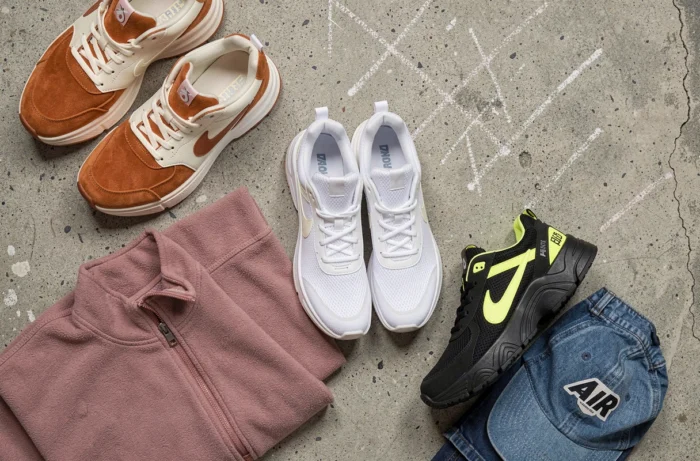
Collaborations between sports brands and designers remain the driving force behind the most anticipated releases. The dominant trend this year is based on the reinterpretation of existing silhouettes rather than the creation of new forms. Nike, Adidas, and other players are drawing from their archives to offer revamped versions of iconic models.
Some key collaboration axes to note:
- Collaborations between fashion houses and sports equipment manufacturers mix technical materials (nylon, breathable mesh) with finishes typically reserved for luxury (full-grain leather, contrasting stitching)
- Capsule editions signed by artists or figures from skate culture introduce colors and graphics absent from main lines
- Regional partnerships, where a brand adapts a global model to the visual codes of a city or local scene, are becoming more frequent
What Distinguishes a Sustainable Collaboration from a Marketing Stunt
A collaboration that marks the year is recognized by its ability to permanently change the perception of a silhouette. The pair must function beyond the initial hype. Models that resell for several months after their release, without a drop in value, indicate a successful collaboration.
Conversely, drops whose secondary value collapses within weeks reflect superficial interest. Longevity in the secondary market becomes a reliable indicator of the relevance of a streetwear collaboration.
Streetwear Style: The Pieces and Codes that Structure Outfits
Beyond sneakers, this year’s streetwear wardrobe is organized around pieces that serve as the foundation for silhouettes. The style is built through layering and the choice of marked proportions.
Elements that recur in collections and on the Instagram accounts of streetwear communities:
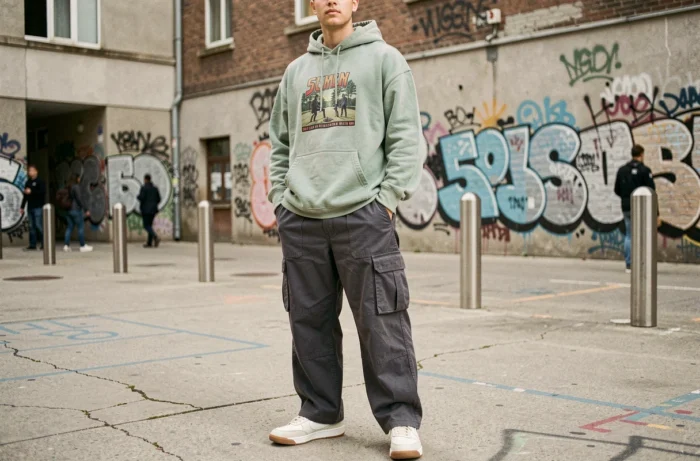
- Oversized cuts on the upper body (hoodies, technical jackets) paired with more fitted bottoms to create a contrast of volumes
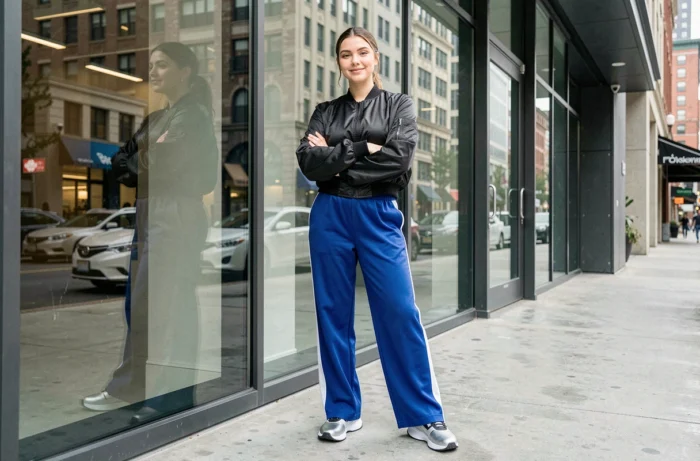
- The return of retro sportswear with tracksuits featuring 90s lines, worn outside of any sporting context
- Functional accessories (crossbody bags, technical caps, wraparound sunglasses) that complete the look without overwhelming it
Unisex fashion continues to assert itself in streetwear. Brands like Carhartt WIP, Stüssy, or Patta offer pieces whose cuts do not target a specific gender, broadening style possibilities and simplifying the construction of a coherent wardrobe.
This year’s streetwear is not just a list of pieces or brands. The arrival of the Digital Product Passport and the rise of recommerce are changing the rules of the game for both brands and buyers. Choosing a pair or a streetwear piece now involves considering its traceability, resale value, and actual durability, three criteria that weigh as much as design in the final selection.